Industrial Hemicellulase Baking: Dosage, pH, and Temperature Guide
Troubleshoot industrial hemicellulase baking dosage, pH, temperature, QC, COA/TDS/SDS, pilot validation, and cost-in-use for dough.
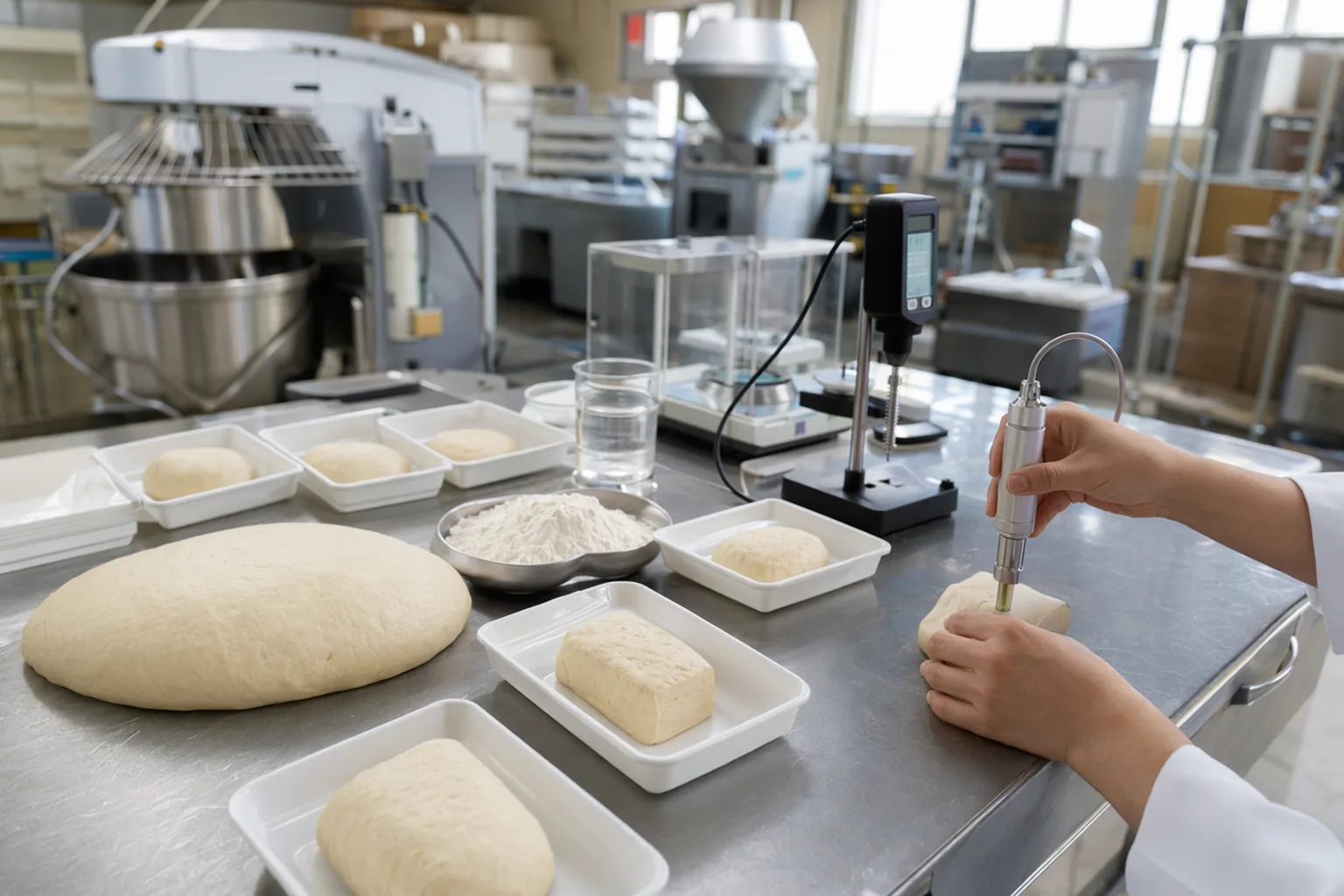
A practical B2B troubleshooting guide for bakeries and ingredient formulators using hemicellulase to improve dough handling, loaf volume, and process consistency.
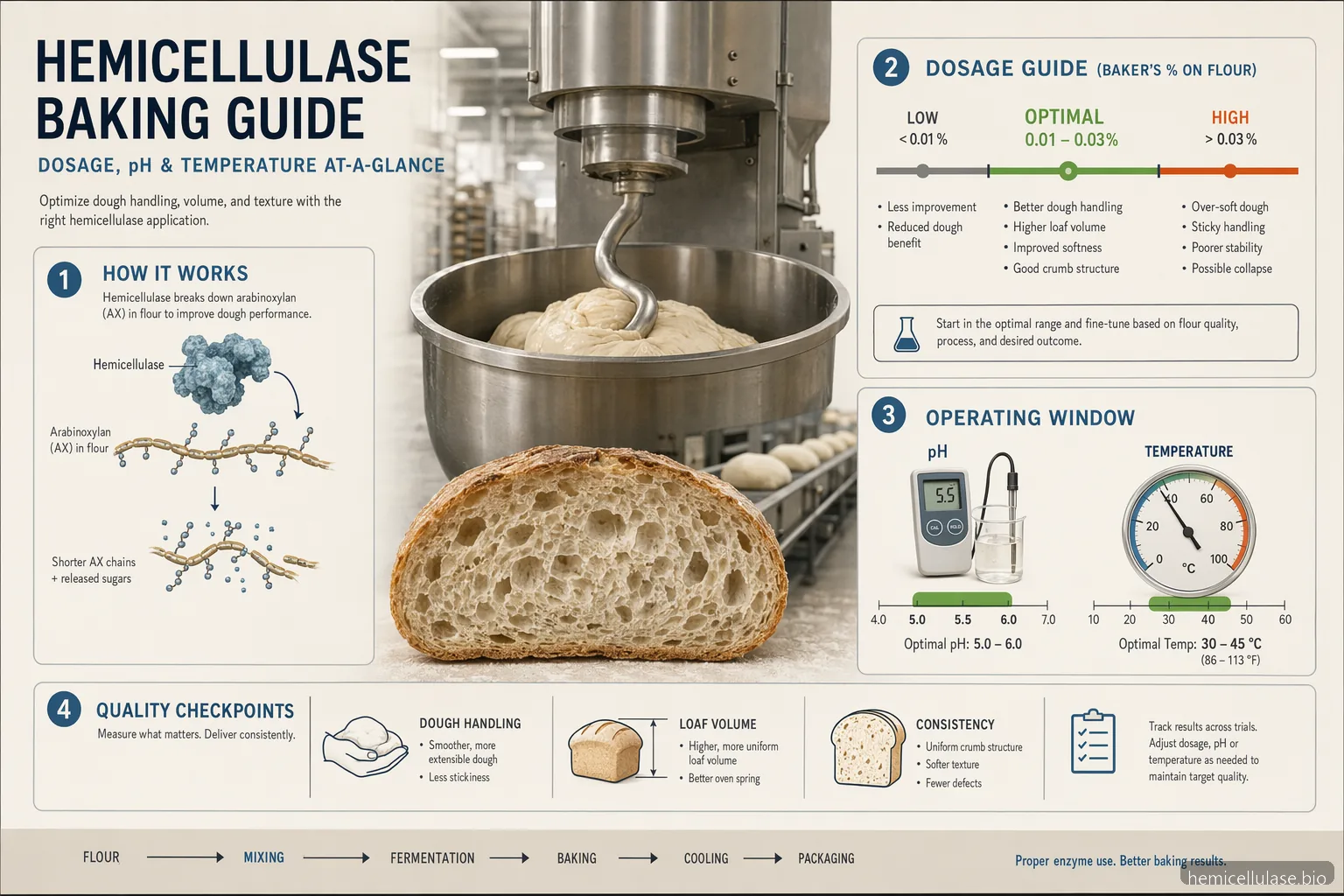
Why Hemicellulase Matters in Industrial Baking
Industrial hemicellulase baking applications target hemicellulose fractions in wheat and other cereal flours, especially arabinoxylans that influence water distribution, dough viscosity, gas retention, and crumb structure. A hemicellulase enzyme preparation may include xylanase activity and, depending on formulation, supporting side activities such as arabinofuranosidase or beta-glucanase. Some industrial xylanase mannanase complex baking products are designed for multigrain, rye, or high-fiber systems where non-starch polysaccharides create variable dough behavior. The practical goal is not maximum hydrolysis; it is controlled modification during mixing, fermentation, and early heating. Too little enzyme may leave sticky or tight dough, while too much may weaken dough, reduce tolerance, or create gummy crumb. Buyers should define the flour stream, process target, and performance metric before requesting samples.
Common targets: loaf volume, dough machinability, crumb softness, and batch consistency. • Typical users: industrial bakeries, premix manufacturers, improver blenders, and flour treatment teams. • Best results come from matching enzyme activity profile to flour quality and process time.
Dosage Troubleshooting for Plant Trials
A safe trial design for industrial hemicellulase enzyme baking usually begins with a low, supplier-recommended dose expressed per kg of flour or per metric ton of flour. Commercial products vary widely in activity units and carrier dilution, so do not transfer a competitor dose directly without unit normalization. As a screening band, many bakeries evaluate several points around the supplier's TDS recommendation, for example low, mid, and high additions across one flour lot and one standard formula. Document water absorption, mixing energy, dough temperature, stickiness, proof height, oven spring, loaf volume, slicing performance, and crumb score. If dough becomes slack, sticky, or collapses after proof, reduce dose or shorten exposure time. If volume and handling do not change, verify enzyme activity, dosing accuracy, flour substrate level, and compatibility with oxidants, emulsifiers, or other enzymes.
Use flour-weight-based dosing for trial clarity. • Run a no-enzyme control and at least three dose points. • Do not compare products only by grams added; compare activity, performance, and cost-in-use. • Lock flour lot, water addition, proof time, and bake profile during screening.
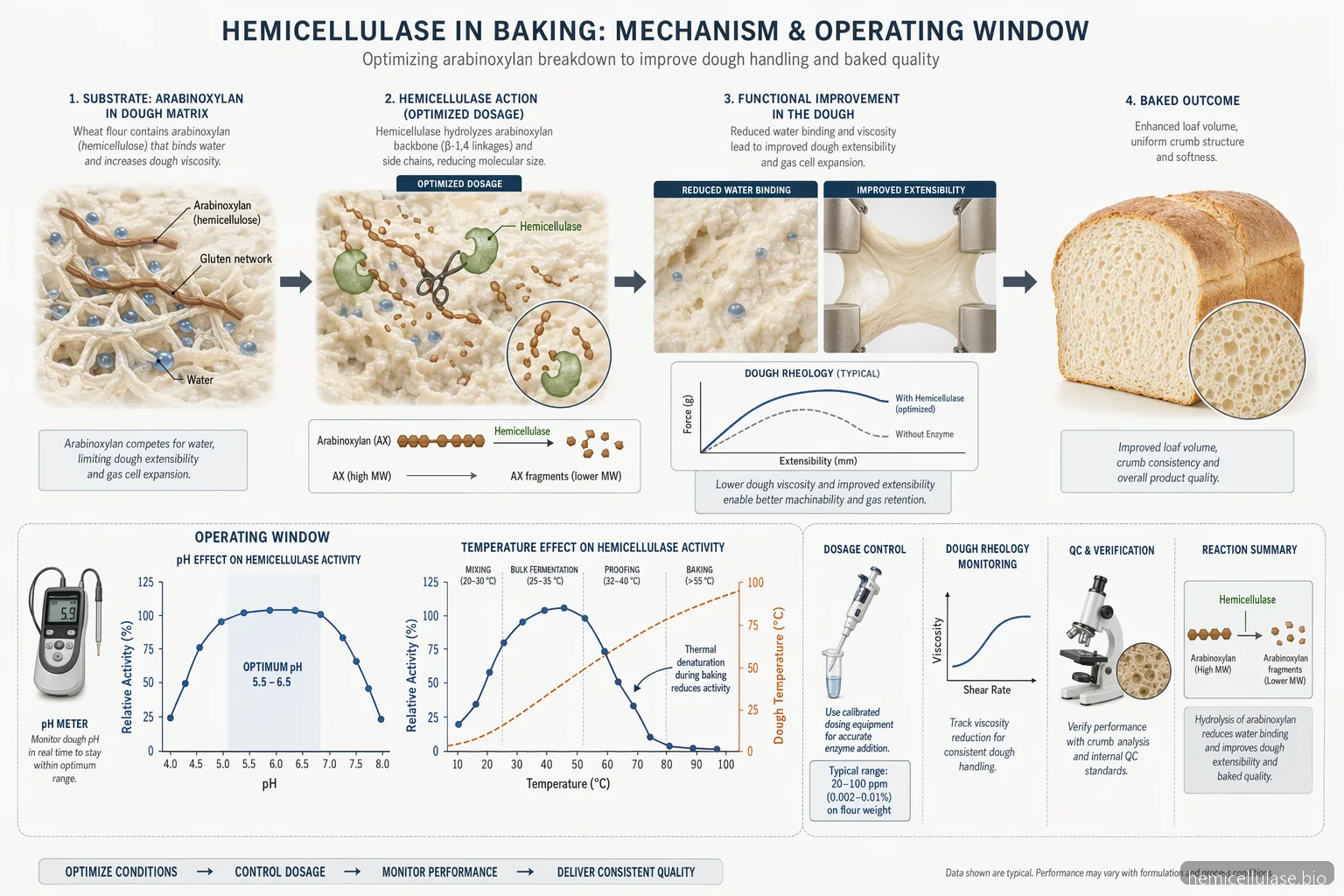
pH and Temperature Conditions in Baking Systems
Most industrial hemicellulase baking evaluations occur in dough systems near pH 5.0-6.0, although exact optima depend on the production organism, enzyme blend, and stabilizers. Standard wheat dough processing temperatures of about 24-32 degrees Celsius are often suitable for activity during mixing, resting, dividing, and proofing. During baking, enzyme activity declines as crumb temperature rises, with progressive denaturation typically occurring as the product moves through the thermal profile. Long fermentation, sponge-and-dough systems, refrigerated dough, high sugar, high salt, or acidic formulas can shift performance and may require a lower or higher dose. For tortillas, buns, pan bread, crackers, or high-fiber bread, validate under the real process rather than relying on a water-buffer activity assay. The TDS should specify recommended pH and temperature ranges, while the COA should confirm lot-specific activity.
Check dough pH, not only ingredient pH. • Record final dough temperature for every trial batch. • Evaluate extended fermentation separately from straight dough. • Confirm whether the product is designed for standard bread, high-fiber, rye, or specialty systems.
QC Checks Before Scale-Up
Before approving an industrial hemicellulase enzyme baking product, convert bench observations into measurable quality controls. Use rheology tools such as farinograph, alveograph, extensograph, mixograph, or rapid visco analysis where available, but always confirm with bake tests because enzyme effects are formula and process dependent. Track loaf specific volume, crumb cell structure, sliceability, moisture, water activity where relevant, and texture over shelf life. Production teams should monitor dosing accuracy, premix uniformity, sieve behavior, dusting risk, and storage conditions. Quality teams should review the COA for activity method, lot number, manufacture date, expiry or retest date, carrier, and microbiological limits if supplied. The SDS should be available for worker handling controls because enzyme powders can require dust management and respiratory exposure precautions.
Require COA, TDS, and SDS before trial approval. • Measure performance after baking and after intended shelf-life intervals. • Audit dosing equipment accuracy at low inclusion rates. • Keep retained samples from each pilot and production lot.
Supplier Qualification and Cost-in-Use
For B2B procurement, the lowest price per kilogram is rarely the best decision. Industrial hemicellulase baking performance depends on activity concentration, side-activity profile, formulation stability, carrier compatibility, and technical support. Ask suppliers to provide a TDS with dosage guidance, handling instructions, storage conditions, declared activity units, and application notes. Request lot-to-lot consistency data and clarify whether activity is measured with an internal or recognized method. During pilot validation, calculate cost-in-use per metric ton of flour, per thousand loaves, or per finished kilogram, including yield effects, rework reduction, water adjustment, and any changes in other improver components. Supplier qualification should also consider lead time, packaging size, documentation responsiveness, change notification practices, and ability to support troubleshooting when flour quality shifts.
Compare cost at equal bakery performance, not equal addition rate. • Confirm shelf life under your warehouse temperature and humidity. • Ask how formulation changes are communicated. • Include technical service responsiveness in supplier scoring.
Relation to Feed, Biofuel, and Pulp Applications
The term hemicellulase covers a broad enzyme family, so an industrial hemicellulase enzyme animal feed product or industrial hemicellulase enzyme biofuel product is not automatically suitable for baking. Feed enzymes may be optimized for gastrointestinal pH and pelleting stability, while industrial hemicellulase biofuel processes may use higher enzyme loads, different pH windows, and longer hydrolysis times. Industrial hemicellulase pulp and paper applications, including industrial hemicellulase enzyme pulp and paper systems, may focus on fiber modification, drainage, bleaching support, or viscosity control. Baking requires food-ingredient suitability, controlled activity during short processing windows, clean sensory performance, and compatibility with flour treatment systems. When sourcing, specify the application as baking from the first inquiry to avoid receiving a technically active but commercially unsuitable xylanase mannanase complex.
Do not substitute feed, biofuel, or pulp enzymes into bakery formulas without full regulatory and process review. • Specify food ingredient use, carrier requirements, and target bakery format. • Request bakery-specific application data whenever possible.
Technical Buying Checklist
Buyer Questions
There is no universal dosage because activity units, carriers, flour substrate, and process time vary by supplier and plant. Start with the range on the supplier TDS, then run a controlled trial with a no-enzyme control plus low, medium, and high dose points based on flour weight. Compare dough handling, proof tolerance, loaf volume, crumb, and cost-in-use before selecting a production target.
An industrial xylanase mannanase complex baking formulation may be useful in multigrain, high-fiber, rye, or specialty bread systems, but it must be validated in the exact formula. Side activities can change water binding, viscosity, and dough strength. Request bakery-specific documentation, confirm food-ingredient suitability, and test sensory, texture, and slicing performance before adding it to a commercial improver blend.
Test the enzyme in the real dough rather than only in a laboratory buffer. Many wheat doughs fall near pH 5.0-6.0, with mixing and proofing temperatures around 24-32 degrees Celsius. However, sourdough, refrigerated dough, high sugar, salt, or long fermentation can change performance. Record dough pH and temperature during every pilot run and compare results with supplier TDS guidance.
At minimum, request a current COA, TDS, and SDS for the exact lot or sample. The COA should show activity, lot identification, date, and relevant quality limits. The TDS should include application guidance, dosage range, storage, and handling information. The SDS supports plant safety review. Also ask about carrier, allergen disclosures, shelf life, change notification, and technical service support.
Compare products at equal bakery performance, not equal price per kilogram or equal grams added. Normalize by activity, effective dosage, flour tonnage, and finished product output. Include any changes in water absorption, yield, rework, shelf-life performance, and other improver components. A more concentrated product may cost more per kilogram but deliver lower cost-in-use if dosage, consistency, and performance are better.
Related Search Themes
hemicellulase, industrial hemicellulase enzyme baking, industrial xylanase mannanase complex baking, industrial hemicellulase pulp and paper, industrial hemicellulase enzyme pulp and paper, industrial hemicellulase enzyme biofuel
Hemicellulase (Xylanase + Mannanase Complex) for Research & Industry
Need Hemicellulase (Xylanase + Mannanase Complex) for your lab or production process?
ISO 9001 certified · Food-grade & research-grade · Ships to 80+ countries
Frequently Asked Questions
What is the best starting dosage for industrial hemicellulase baking trials?
There is no universal dosage because activity units, carriers, flour substrate, and process time vary by supplier and plant. Start with the range on the supplier TDS, then run a controlled trial with a no-enzyme control plus low, medium, and high dose points based on flour weight. Compare dough handling, proof tolerance, loaf volume, crumb, and cost-in-use before selecting a production target.
Can a xylanase mannanase complex be used in bread improvers?
An industrial xylanase mannanase complex baking formulation may be useful in multigrain, high-fiber, rye, or specialty bread systems, but it must be validated in the exact formula. Side activities can change water binding, viscosity, and dough strength. Request bakery-specific documentation, confirm food-ingredient suitability, and test sensory, texture, and slicing performance before adding it to a commercial improver blend.
What pH and temperature should be used to test hemicellulase in dough?
Test the enzyme in the real dough rather than only in a laboratory buffer. Many wheat doughs fall near pH 5.0-6.0, with mixing and proofing temperatures around 24-32 degrees Celsius. However, sourdough, refrigerated dough, high sugar, salt, or long fermentation can change performance. Record dough pH and temperature during every pilot run and compare results with supplier TDS guidance.
What documents should buyers request from a hemicellulase supplier?
At minimum, request a current COA, TDS, and SDS for the exact lot or sample. The COA should show activity, lot identification, date, and relevant quality limits. The TDS should include application guidance, dosage range, storage, and handling information. The SDS supports plant safety review. Also ask about carrier, allergen disclosures, shelf life, change notification, and technical service support.
How should cost-in-use be compared between hemicellulase products?
Compare products at equal bakery performance, not equal price per kilogram or equal grams added. Normalize by activity, effective dosage, flour tonnage, and finished product output. Include any changes in water absorption, yield, rework, shelf-life performance, and other improver components. A more concentrated product may cost more per kilogram but deliver lower cost-in-use if dosage, consistency, and performance are better.
Related: Hemicellulase Enzyme for Baking and Dough Conditioning
Turn This Guide Into a Supplier Brief Request a bakery hemicellulase specification review, sample plan, and pilot trial support for your flour system. See our application page for Hemicellulase Enzyme for Baking and Dough Conditioning at /applications/hemicellulase-baking-dough-conditioning/ for specs, MOQ, and a free 50 g sample.
Contact Us to Contributehello@mail.hemicellulase.bio