Hemicellulase Enzyme for Pulp Bleaching Pre-Treatment
Reduce chlorine chemical demand and improve pulp brightness with xylanase pre-bleaching treatment of kraft pulp at pH 5.0–6.5 and 45–60°C.
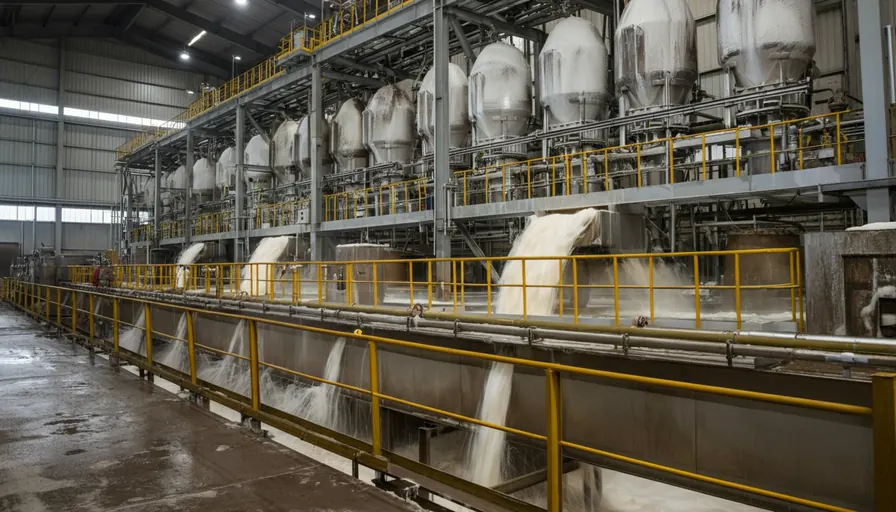
In kraft pulp production, the bleaching sequence is one of the highest chemical cost centres in the mill. Chlorine-based bleaching agents — elemental chlorine, chlorine dioxide, and hypochlorite — must penetrate the fibre matrix to oxidise chromophoric lignin, but residual xylan deposited on fibre surfaces after cooking creates a barrier that blocks penetration and forces higher chemical dosing. Xylanase pre-bleaching, using hemicellulase enzyme (xylanase, EC 3.2.1.8) in the stage before the first chlorination or chlorine dioxide bleaching step, breaks down this surface xylan layer. This opens the fibre structure, improves diffusion of bleaching chemicals into the fibre, and allows equivalent brightness to be achieved with lower chemical input. Published mill trials consistently report 15–25% reductions in chlorine demand (expressed as available chlorine equivalent, ACE) or equivalent improvements of 2–3 brightness units (ISO%) at fixed chemical dosing. The technology is well-established in Scandinavian, Brazilian, North American, and Asian pulp mills using softwood and hardwood kraft pulp. Hemicellulase is applied at the first alkaline extraction stage (E stage), or as a dedicated XY stage, typically at pH 5.0–6.5, 45–60°C, 1–2 hours residence time, with dosage ranging from 0.5–2.0 kg enzyme powder per tonne of air-dried (AD) pulp. Pulp consistency is typically 10–12%. The enzyme is inactivated in the subsequent hot alkaline wash step, so no carry-over into the bleach sequence occurs. From a procurement perspective, xylanase for pulp bleaching is evaluated on xylanase activity (U/g), pH stability across the application window, thermostability under mill conditions, and whether the formulation is free of cellulase activity that could reduce pulp viscosity and yield. Our hemicellulase for pulp is produced from Trichoderma longibrachiatum, low in cellulase sideactivity, and supplied at 10,000–50,000 U/g with full technical documentation.
Kraft Softwood Pulp Pre-Bleaching
Softwood kraft pulp from pine and spruce has high residual xylan after cooking. Xylanase at 1.0–2.0 kg/t AD pulp, applied for 60–90 minutes at pH 5.5 and 55°C, opens the fibre surface and reduces chlorine dioxide demand in the D0 stage by 15–20%. Brightness ceiling in the final stage increases by 1–2 ISO%, reducing chemical cost at target brightness.
Eucalyptus Hardwood Pulp Treatment
Eucalyptus kraft pulp (used for tissue and printing paper) contains high xylan content, making it especially responsive to xylanase pre-treatment. Dosage at 0.5–1.0 kg/t AD pulp at pH 5.0–6.0 and 50–60°C for 60 minutes is typical. Mills report 20–25% ACE reduction or brightness improvement of 2–3 ISO% at fixed bleaching chemical levels.
Totally Chlorine-Free (TCF) Bleaching Support
In TCF sequences using oxygen, ozone, and hydrogen peroxide, xylanase pre-treatment reduces ozone demand and improves brightness ceiling in the absence of chlorine chemistry. This supports mills targeting Ecolabel or Nordic Swan certification requirements for low organochlorine effluent. Dosage and pH optimisation is similar to ECF sequences.
Effluent AOX Reduction
By reducing chlorine chemical input, xylanase pre-treatment directly reduces the formation of adsorbable organic halogens (AOX) in the bleach plant effluent. This is a compliance advantage for mills operating under strict discharge permits. The enzyme treatment itself introduces no AOX and is inactivated by the alkaline extraction wash that follows.
| Parameter | Value |
| Activity range | 10,000 – 50,000 U/g (xylanase basis) |
| Optimal pH | 5.0 – 6.5 |
| Optimal temperature | 45°C – 60°C |
| Form | Light brown powder |
| Shelf life | 12 months (sealed, cool, dry place) |
| Packaging | 25 kg drums / custom packaging |
Frequently Asked Questions
How does xylanase hemicellulase reduce chlorine demand in pulp bleaching?
Residual xylan on kraft fibre surfaces blocks bleaching chemical penetration, forcing higher doses to achieve target brightness. Xylanase cleaves this surface xylan layer, opening the fibre structure and improving chlorine dioxide or chlorine diffusion into the fibre matrix. This allows mills to achieve equivalent brightness at 15–25% lower chemical input, or to gain 2–3 brightness units at fixed dosing — directly reducing chemical cost and effluent AOX load.
What are the typical application conditions for hemicellulase in pulp mills?
Standard pre-bleach xylanase treatment is carried out at pH 5.0–6.5 and 45–60°C, with 1–2 hours residence time and 10–12% pulp consistency. Dosage typically ranges from 0.5–2.0 kg enzyme powder per tonne of air-dried pulp. The enzyme stage (XY or EX stage) is positioned before the first chlorine dioxide stage (D0) in an ECF sequence, or before the ozone/peroxide stage in TCF sequences.
Does hemicellulase xylanase damage pulp fibres or reduce yield?
A well-formulated xylanase for pulp should have minimal cellulase side-activity to avoid fibre damage. Our product is produced from Trichoderma longibrachiatum and is characterised for low cellulase contamination. Pulp viscosity loss is negligible at standard dosing. Yield impact from xylan removal is typically 0.2–0.5% of OD pulp, which is offset by reduced chemical degradation of cellulose in the bleach sequence.
What certifications and documentation are provided for pulp and paper applications?
Standard documentation includes COA, TDS, and MSDS. ISO 9001 certification covers the manufacturing process. For paper mills, we can provide xylanase activity assay basis (DNS method or equivalent), cellulase side-activity data, and pH/temperature stability profiles relevant to the XY stage conditions. Custom documentation packages can be prepared for mill procurement and QA approval.
Request Xylanase for Pulp Bleaching Trials
For manufacturers, distributors and resellers. Tell us the product or application (baking, feed, pulp, brewing, coffee, other), the quantity per order and per year, the destination country, and your process pH and temperature. We will recommend an activity grade, ship a 100 g free sample with COA and TDS, and quote bulk pricing within 24 hours.
Request a Quote