Hemicellulase Enzyme for Fruit Juice Viscosity and Yield
Reduce juice viscosity and improve extraction yield in apple, pear, and berry processing by hydrolysing hemicellulose cell wall components with a xylanase-mannanase complex.
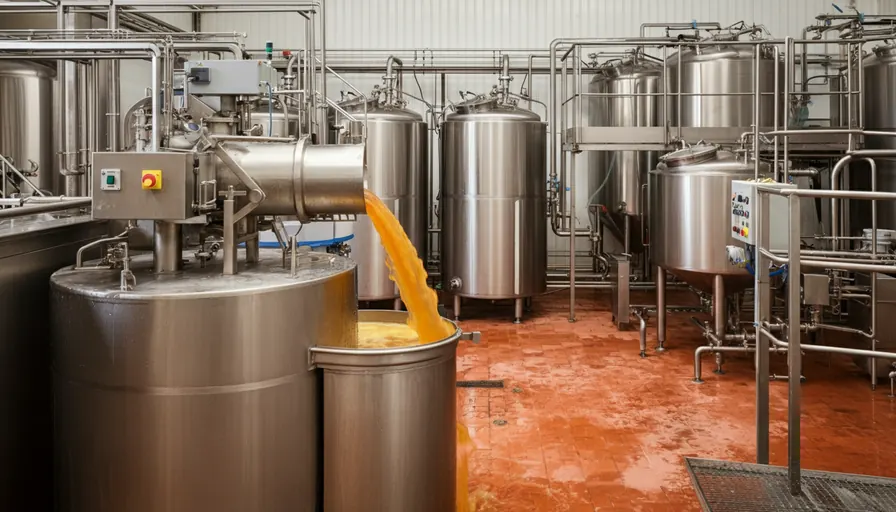
Fruit juice extraction efficiency depends significantly on cell wall deconstruction — the ability to break down the structural polysaccharides that maintain fruit tissue integrity and trap juice inside. While pectinase is the primary enzyme for cell wall breakdown in juice processing, hemicellulose fractions — particularly xyloglucan, arabinoxylan, and galactomannan present in apple, pear, stone fruit, and berry cell walls — contribute to residual viscosity and poor juice release that pectinase alone cannot fully address. Hemicellulase, combining xylanase (EC 3.2.1.8) and mannanase (EC 3.2.1.78) activity, complements pectinase in fruit mash treatment by targeting these hemicellulose linkages. Xylanase cleaves the xylan and xyloglucan backbone, reducing the structural matrix that holds cells together and lowers must viscosity. Mannanase attacks galactomannan present in seeds and some fruit tissues, further reducing resistance to pressing. In commercial apple and pear juice production, hemicellulase applied as part of a pectinase-cellulase-hemicellulase enzyme blend during mash maceration improves free-run juice yield by 3–8%, reduces press residue moisture, and lowers centrifuge and filter load. For berry processing — strawberry, blackberry, blueberry, and raspberry — where cell wall polysaccharides are more complex and include significant arabinan, xylan, and pectin, hemicellulase complements pectinase by addressing non-pectin hemicellulose components. Standard application conditions are pH 3.5–5.5 (aligning with fruit juice acidity) and 40–55°C during 30–60 minutes mash maceration. Dosage in commercial juice production ranges from 20–100 g per tonne of fruit, adjusted to fruit type, maturity, and target viscosity reduction. For concentrated juice, cider, and wine base operations, lower viscosity improves ultrafiltration and nanofiltration efficiency, reducing membrane fouling and extending membrane life.
Apple and Pear Juice Mash Maceration
Apple mash maceration with a pectinase-hemicellulase blend at 50–80 g/tonne, pH 3.8–4.5 and 45–50°C for 30–60 minutes, breaks down xyloglucan and arabinoxylan in cell walls to improve juice flow from the press. Free-run yield increases of 3–5% are typically achieved. Reduced press residue moisture also lowers dry matter in the pomace, improving its value as animal feed or fermentation substrate.
Berry Processing Viscosity Reduction
Strawberry, raspberry, and blackberry juices are inherently high-viscosity due to complex cell wall polysaccharides including arabinan, xylan, and rhamnogalacturonan. Hemicellulase at 40–100 g/tonne, combined with pectinase, reduces must viscosity and improves throughput on belt presses and centrifuges. Particularly valuable in single-serve berry juice and smoothie concentrate production where clarity and flow rate are critical.
Concentration and Membrane Filtration
In concentrated apple or berry juice production, high viscosity and soluble polysaccharide load increases fouling of ultrafiltration (UF) and reverse osmosis (RO) membranes. Hemicellulase treatment during or after pressing reduces hemicellulose-derived soluble polymer content, lowering viscosity and improving flux rates by 10–20% on UF membranes. This extends membrane cleaning intervals and reduces water and chemical use in CIP.
Cider and Fruit Wine Base Preparation
In cider and fruit wine production, hemicellulose-derived polysaccharides contribute to fermentation haze and filter load. Hemicellulase during mash maceration at pH 3.5–5.0 and 40–50°C reduces residual polysaccharide load in the fermenting must, improving yeast access to fermentable sugars, reducing filter cake build-up during cross-flow filtration, and contributing to clarity in the finished product.
| Parameter | Value |
| Activity range | 10,000 – 50,000 U/g (xylanase basis) |
| Optimal pH | 3.5 – 5.5 |
| Optimal temperature | 40°C – 55°C |
| Form | Light brown powder |
| Shelf life | 12 months (sealed, cool, dry place) |
| Packaging | 25 kg drums / custom packaging |
Frequently Asked Questions
How does hemicellulase improve juice yield in fruit processing?
Hemicellulase cleaves xyloglucan, arabinoxylan, and galactomannan in fruit cell walls — hemicellulose components that pectinase cannot fully degrade. By breaking these structural polysaccharides, hemicellulase reduces the structural matrix holding fruit cells together, lowering must viscosity and improving juice drainage from the press. Combined with pectinase and cellulase in a mash maceration enzyme blend, hemicellulase contributes to 3–8% improvement in free-run juice yield in apple and pear processing.
Can hemicellulase be used with pectinase in juice production?
Yes. Hemicellulase and pectinase are complementary and are commonly used together in commercial fruit juice enzyme blends. Pectinase targets pectin (the primary cell wall cement), while hemicellulase addresses xyloglucan, arabinoxylan, and mannan. Some commercial enzyme preparations for juice processing already include both activities, but separate dosing allows formulators to optimise each activity independently to the fruit substrate.
What pH range is suitable for hemicellulase in fruit juice processing?
Fruit juices are acidic, with most apple and pear juices at pH 3.5–4.5 and berry juices at pH 3.0–4.0. Our hemicellulase maintains useful activity at pH 3.5–5.5, which covers the mash maceration pH range for most fruits. For very low-pH berries, a dosage trial is recommended to confirm residual activity at process pH. Apple and pear are typically within the optimal activity window.
What documentation ships with hemicellulase for food-grade juice applications?
Full documentation includes COA with xylanase activity assay, TDS covering pH/temperature profiles, MSDS, and ISO 9001, HALAL, KOSHER, and Food Grade certifications. For juice and beverage applications, food-grade certification is standard. We can also provide allergen declarations and country-of-origin documentation required by European or North American food regulatory submissions.
Get Hemicellulase for Juice Processing
For manufacturers, distributors and resellers. Tell us the product or application (baking, feed, pulp, brewing, coffee, other), the quantity per order and per year, the destination country, and your process pH and temperature. We will recommend an activity grade, ship a 100 g free sample with COA and TDS, and quote bulk pricing within 24 hours.
Request a Quote