Hemicellulase Enzyme for Baking and Dough Conditioning
For bread-improver makers, industrial bakeries and the distributors who supply them: a xylanase hemicellulase complex that improves wheat dough extensibility, loaf volume and crumb uniformity. Wholesale and bulk supply, quoted per order.
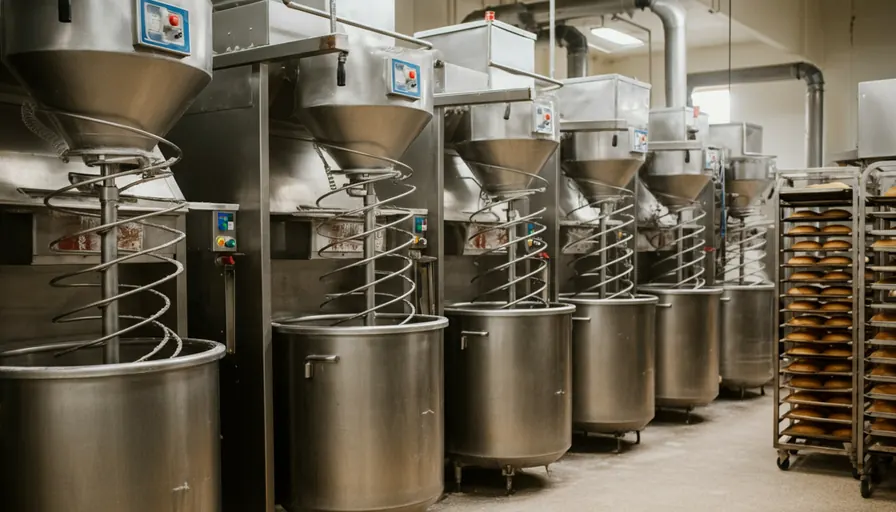
Wheat flour contains 2–3% arabinoxylan (AX) by dry weight — a hemicellulose fraction that plays a critical but double-edged role in dough behaviour. Water-extractable AX (WE-AX) contributes to gluten network extension and gas retention, while water-unextractable AX (WU-AX) competes with gluten for water, creating stiff, less extensible dough with reduced oven spring. Xylanase (EC 3.2.1.8), the active component of hemicellulase, solubilises WU-AX by cleaving the xylan backbone at internal beta-1,4 linkages. This releases water bound to the insoluble fraction, improving hydration uniformity and gluten development. The practical outcomes in commercial baking are measurable: improved dough extensibility and reduced resistance to extension (higher Rmax/E ratio on Extensograph), better machinability on dividers and sheeters, increased loaf volume (typically 5–12%), and finer, more uniform crumb structure. Hemicellulase operates optimally at pH 4.5–6.0 — aligning with standard bread dough pH — and 45–60°C, covering the entire oven-spring temperature ramp from proof to initial crust set. Dosage in commercial baking typically ranges from 10–100 g per tonne of flour, depending on flour quality, AX content (influenced by wheat variety and milling fraction), and process line speed. Soft wheat flours with high WU-AX may require higher dosing; hard wheat flours with strong gluten networks may need lower rates to avoid over-softening. Hemicellulase pairs well with glucose oxidase, lipase, and amylase in multi-enzyme improver blends. For improver manufacturers, industrial bakeries and resellers, our hemicellulase is produced via Trichoderma longibrachiatum fermentation, supplied as a standardised powder at 10,000–50,000 U/g xylanase basis in 25 kg fibre drums or custom packaging, with clear assay basis and batch-to-batch consistency backed by ISO 9001, HALAL, and KOSHER certification; send your flour type, quantity and destination to request a quote.
Pan Bread Volume and Crumb Structure
In pan bread production, WU-AX restricts gas cell expansion during proofing and early baking. Xylanase at 20–60 g/tonne flour solubilises the insoluble AX, releasing bound water for gluten development and improving oven spring. Typical results include a 6–10% volume increase on the Chopin Baking Test and improved crumb uniformity on C-Cell analysis.
Flat Bread and Tortilla Extensibility
Flat breads require high extensibility without tearing. Xylanase reduces WU-AX interference with gluten, producing softer, more pliable dough that rolls more consistently on industrial lines. Dosage of 15–40 g/tonne flour is typical, adjusted to flour protein level and line humidity. Reduces sheeting breakage and off-spec product in high-throughput tortilla production.
Whole Wheat and High-Fibre Dough
Whole wheat and high-bran formulations have significantly elevated AX content from the bran fraction, creating tough, low-volume dough. Hemicellulase at 60–100 g/tonne helps degrade the bran AX, improving water distribution, reducing dough stiffness, and improving specific volume. Supports reformulation targets without compromising loaf height or crumb quality.
Enzyme Improver Blend Formulation
Improver manufacturers combine xylanase hemicellulase with glucose oxidase (dough strengthening), lipase (crumb whitening and stability), and amylase (anti-staling) for comprehensive performance across flour types. Hemicellulase is typically the viscosity-modifying component in the blend, dosed at 20–50% of the xylanase target in the total enzyme improver package.
| Parameter | Value |
| Activity range | 10,000 – 50,000 U/g (xylanase basis) |
| Optimal pH | 4.5 – 6.0 |
| Optimal temperature | 45°C – 60°C |
| Form | Light brown powder |
| Shelf life | 12 months (sealed, cool, dry place) |
| Packaging | 25 kg drums / custom packaging |
Frequently Asked Questions
How does hemicellulase improve bread volume in commercial baking?
Hemicellulase xylanase solubilises water-unextractable arabinoxylan (WU-AX) in wheat flour. WU-AX competes with gluten for water, creating a stiffer, less extensible dough. When xylanase converts WU-AX to water-extractable form, water is redistributed to the gluten network, improving gluten hydration, gas retention, and oven spring. Commercial trials typically report 5–12% volume improvements, with the exact gain dependent on flour quality, AX content, and dosage.
What dosage of xylanase hemicellulase is used in bread dough?
Commercial dosage ranges from 10–100 g per tonne of flour. Soft wheat flours with high water-unextractable AX typically require higher dosing (50–100 g/t), while strong wheat flours may respond well at 20–40 g/t. Whole wheat formulations with elevated bran content often require the upper end. Final dosage should be confirmed by baking trials assessing volume, crumb score, and extensograph parameters.
Can hemicellulase cause dough over-softening?
Yes, over-dosing hemicellulase can produce excessively sticky, slack dough due to over-hydrolysis of arabinoxylan that weakens gluten support. This is why dose optimisation is essential and should be done in small increments. Starting at 20 g/tonne and scaling up with Extensograph and baking volume feedback is a standard approach. Stickiness issues are typically resolved by reducing dose rather than adjusting other flour parameters.
How does hemicellulase interact with other baking enzymes?
Hemicellulase synergises positively with glucose oxidase (which strengthens the gluten network by oxidative cross-linking) and lipase (which improves crumb whiteness and gas cell stability). It can also complement amylase, which targets starch degradation for anti-staling. In multi-enzyme improver blends, xylanase is typically the first enzyme optimised, as its effect on water distribution influences the dosage requirements for all other components.
Request a Quote for Wholesale or Bulk Supply
For manufacturers, distributors and resellers. Tell us the product or application (baking, feed, pulp, brewing, coffee, other), the quantity per order and per year, the destination country, and your process pH and temperature. We will recommend an activity grade, ship a 100 g free sample with COA and TDS, and quote bulk pricing within 24 hours.
Request a Quote